

6/10/26 and 6/11/26—days 532 and 533 of my biomechaneering process
(Started: 12/26/24)
Today I noticed changes in how my body organizes movement and how it responds to it: better glute engagement symmetry, improved core sequencing, less nervous system deregulation and more.
New here? This is my ongoing biomechaneering process: documenting my experiments optimising craniofacial development, breathing, posture, adaptation and more.
If you’re interested in exploring how biomechanics influences health, performance, and aesthetics, join the free biomechaneering community.
OBSERVED CHANGES
Kettlebell swings: Glutes engaged more symmetrically with natural foot rotation; pelvic floor easier to manage while maintaining core engagement; no rib flare; foot pressure more distributed
Ring push-ups: Abs and pecs became the dominant movers (previously lower back/shoulders dominated); pelvic floor control improved
Ring pull-ups: Lats became the primary mover; triceps no longer dominant; strong grip maintained despite rib flare persisting
Breathing: Improved control throughout the session; tongue naturally maintained palate contact without conscious effort
Post-session state: Improved post-session parasympathetic balance even on a cold, high-humidity day, which usually flares deregulation
CURRENT HYPOTHESES
Natural foot rotation enabled better glute activation; eccentric phase descent may trigger more automatic core sequencing
Reduced forced hallux flexion may allow better grounding and pressure distribution
Biomechanical improvements may be shifting primary movers in multi-joint exercises, changing force availability and soreness patterns
Improved tongue-to-palate contact may correlate with reduced nasal airway collapse
The system still struggles to maintain activation and calm simultaneously; this remains the main limiting factor, but it is slowly improving
CURRENT CONTEXT
Current strategy:
Main biomechanical focus on maintaining three-dimensional diaphragmatic breathing, intra-abdominal pressure and general technique during training. Higher focus with fewer sets, avoiding upper airway collapse. RevivThree on during the whole session.
Occasional 3D oral face-pulling and histo-release as additional accelerators.
Wearing RevivThree during sleep and a few hours during the day.
Current focus:
Strength training, posture, breathing mechanics and nervous system regulation.
Full journal entry:
6/10/26 — day 532 of my biomechaneering process
(Started: 12/26/24)
Did another training session today. Various improvements as usual. Routine A.
I started the kettlebell swing a bit differently. I kept the feet in what was my natural, neutral position. Meaning in slight lateral rotation compared to strictly pointing forwards, as I did notice it helped contract the glutes when practising it previous to this session.
Always while wearing my toe spacers, of course.
As usual, the technique improved, and I noticed a couple of things.
First, it was significantly easier to relax the pelvic floor on inhalation while keeping the contraction of the core. I noticed the latter contracted a bit harder automatically when descending the former, during the eccentric phase.
It was also easier to uplift the pelvic floor on the exhalation/concentric phase, without contracting excessively or losing the glutes’ engagement. On this topic, the contraction was also much more symmetric, as I actually felt much more engagement of my left glutes than usual, where I’d usually feel a bit of my upper hamstrings take over instead.
I also felt a bit more engagement from my back core, meaning I could send the air back there more easily.
I looked at it once during the bottom of the flex, and I didn’t see my ribs flare at all.
In terms of my feet, they stayed glued to the ground. I still get a bit of inversion when increasing the weight, although I didn’t feel like I was losing balance at all this time.
Before I used to consciously flex my hallux, which I believe was incorrect.
Now the toes remained in contact with the ground, maybe with only slight, unconscious flexion. Most of the feet press to the ground with the necessary force, no more and no less.
Once I was done, I felt a deeper contraction and “sore feeling” (meaning it had been worked hard) of my frontal core “abs” when exhaling before picking up the kettlebell. Maybe it was my rectus abdominals?
When looking at my reflection on the window, I noticed my jawline was more prominent and my jaw had come forward as usual, with my bite very, very slightly towards an underbite. The change in the jaw positioning is very noticeable and remains for the most part, while the change in bite was slight and went back to my usual only left front tooth contact in a minute.
In general I’m moving more weight with progressingly better technique, and the size of my glutes is proof of it.
Afterwards, I did ring push-ups. My abs contracted really hard, and my pecs gave up, which were better engaged. Before I used to feel the movement more in my lower back and shoulders, but that has changed. Like with the kettlebell swing, I was able to mobilize the pelvic floor better and maintain core engagement. Although I still have to consciously manage it for now.
I felt a bigger stretch in my upper pecs/pectoralis minor and overall better contraction of the pectorals in general, which was reflected by increased soreness and enlargement in this zone right after the exercise.
And finally, the assisted ring pull-up. I did fewer reps for some reason; I felt like my lats engaged (maybe more than usual), but I had less force. Is it that they worked harder on the other exercises this time? Or that the biomechanics actually prioritized them this time, making them the primary movers, and so I had less force? I didn’t particularly feel my triceps at all, whereas when I started with this exercise a few months ago, they were the first muscle to give up before, maybe one of the primary movers. So maybe there’s that, or a combination of factors.
My core also contracted and stayed active, but still I had prominent rib flare at the concentric and a bit on the eccentric. It is much harder to maintain it in this position, probably because of the mechanics of the scapula that I still need to work on.
Either way, once again I was surprised by the strength of my grip. Once I was done, it was physically hard to stop hanging and drop into the floor. This isn’t without any conscious command to “grip harder”; it seems my hands simply grasp more strongly as soon as I put them around the bar.
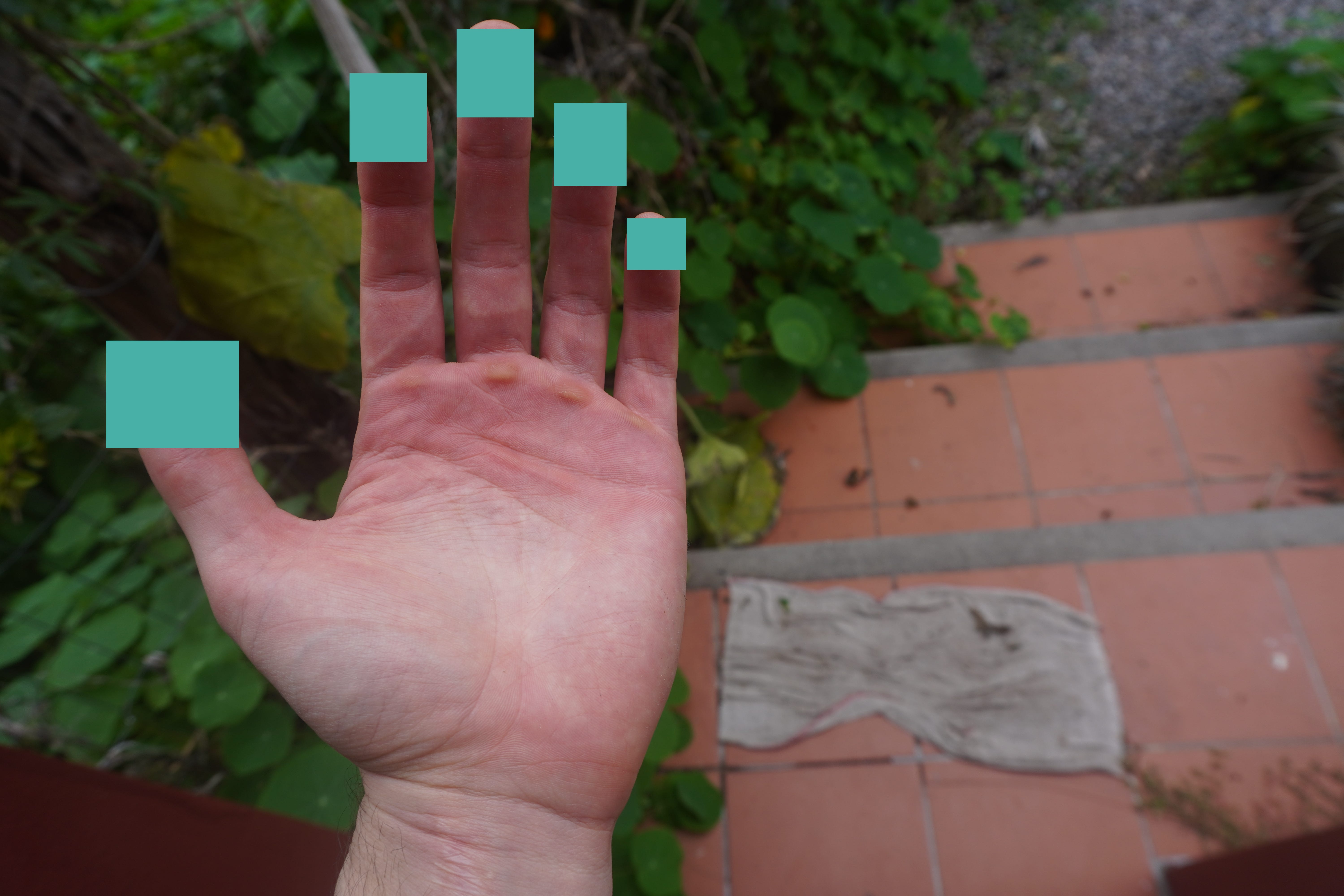
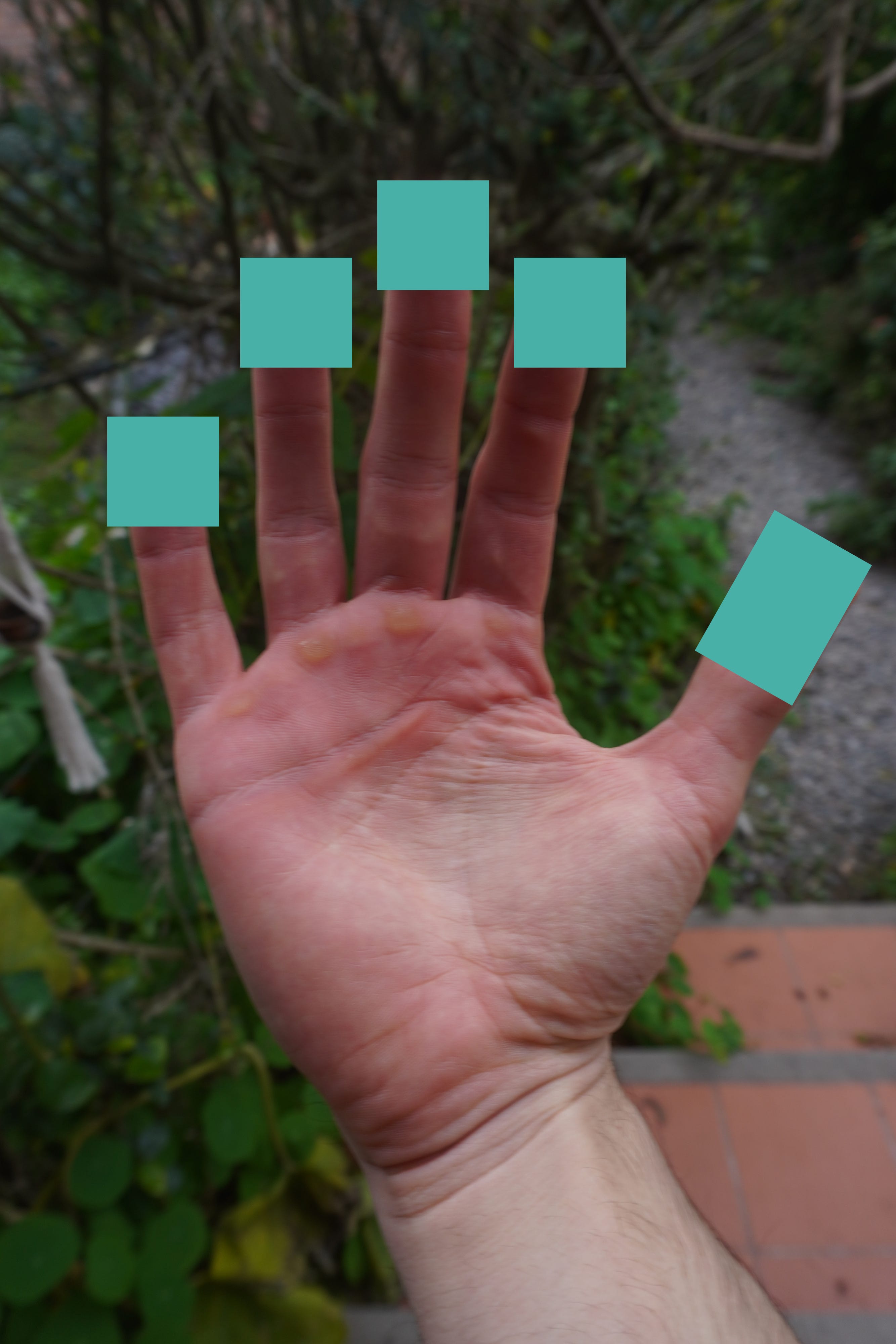
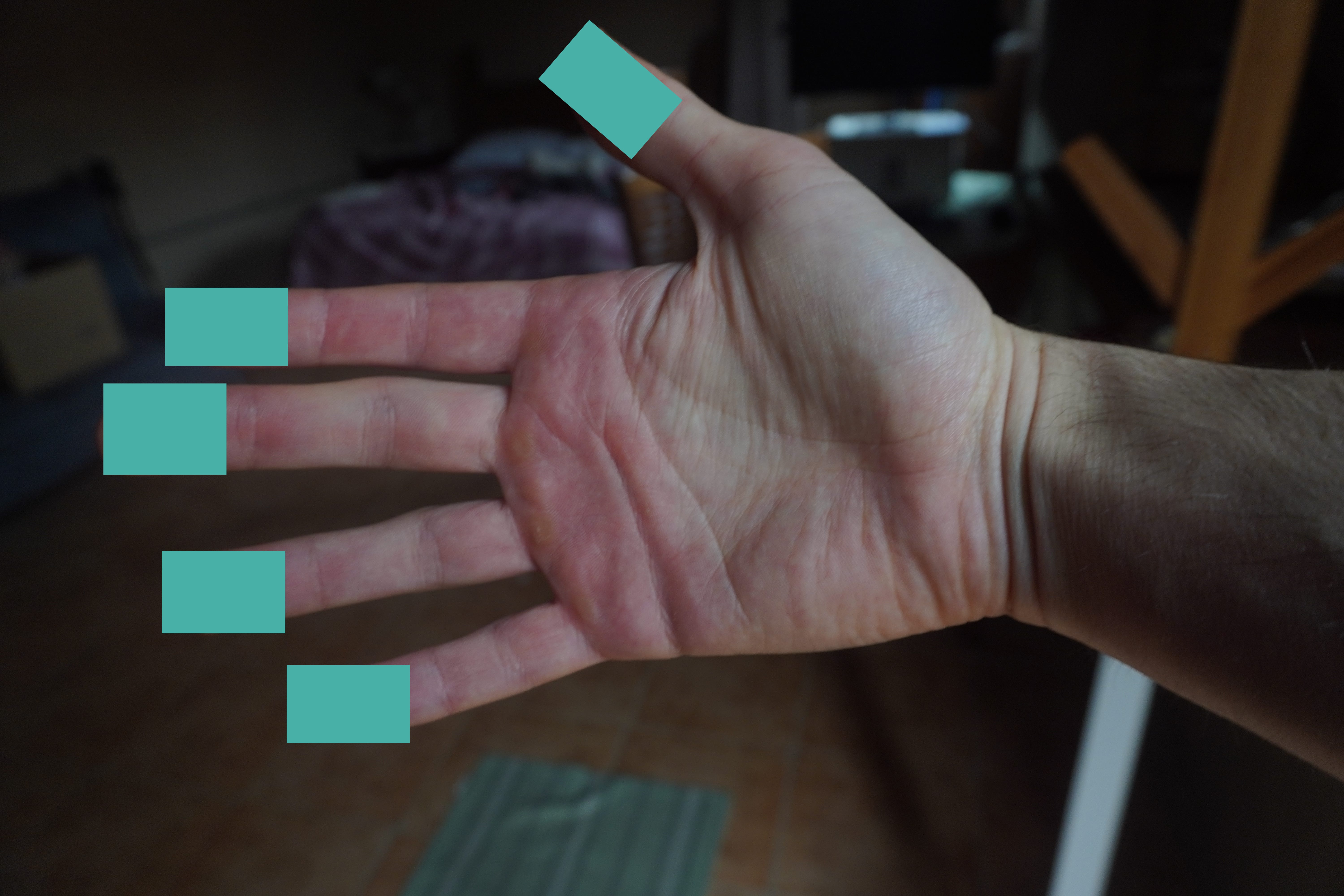
And when I looked at my palms right after, they were red with my calluses popping. Just like the session before. I didn’t feel the pressure in my palms at all in the moment. The palms recovered their colour after around 30 seconds. Pictures at the bottom.
Throughout the session it was easier to breathe in and out deeply without collapsing my upper airway (it still happened to an extent, but much less, and didn’t require as much focus).
I also swallowed saliva various times before every lift, and I noticed it was easier to keep the tongue glued to the palate without my conscious effort. This likely contributed and correlates with the improvement mentioned above.
The session was pretty intense (went to failure on the push-ups and pull-ups), but it made me feel very good; I was missing it. And once again after completing it, I remained “activated” but not as deregulated. I didn’t become pathologically aware of my nose or experience the frequent uncomfortable breathing sensation in it. Even though today is a high-humidity, cold day, which tends to make this aspect worse.
My heart beats a bit harder compared to before I started, but it isn’t as “obvious” or “prominent” as other occasions. I still have room to improve my parasympathetic balance, but the improvement is noticeable.
6/11/26 — day 532 of my biomechaneering process
(Started: 12/26/24)
Yesterday, I skipped the nap and remained “activated” for the rest of the day. I wasn’t particularly nervous or anxious, as it might have happened on other occasions, so, as I said, it was an improvement, but still I felt a bit more “wired”. I continued working on the computer after lunch and then went to college before returning home and going to bed.
Today I woke up again with my mind racing a bit. Meaning, already putting myself in certain situations, like imagining how I would explain certain topics or insights when going against widely established dogmas or debating someone and stuff like that. Of course, related to this, I woke up with my nose irritated and breathing a bit more superficially.
I also did a bit of the single-legged squats, but I felt a bit tired and like my breathing was a bit more uncomfortable and harder to manage, so I decided to move routine B to tomorrow.
Again, based on the general experience this time, I believe I remained more “balanced” after the session, but it’s going to take a while to have energy and focus while simultaneously remaining completely calm and relaxed. And being able to switch off from both states easily. It seems that it’s really hard for my system to achieve both at the same time.
Good post!